There is a broader climatic shift unfolding when the world is increasingly consumed by geopolitical turbulence, allowing climate concerns to slip quietly down the global priority list Europe is…
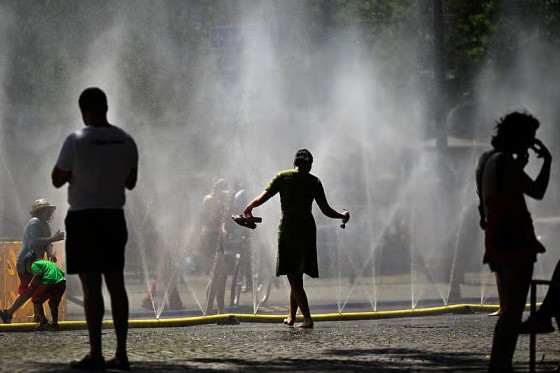
There is a broader climatic shift unfolding when the world is increasingly consumed by geopolitical turbulence, allowing climate concerns to slip quietly down the global priority listEurope is enduring an exceptional summer, with heatwaves pushing temperatures beyond 45°C across the southern parts of the continent, reaching levels once considered improbable even for Mediterranean countries.
Cities such as Athens, Rome and Marseille recorded unprecedented highs; tourist sites were closed, transport systems disrupted, and heat‑stress cases surged to alarming levels. These events are not isolated anomalies but part of a broader climatic shift unfolding at a moment when the world is increasingly consumed by geopolitical turbulence, allowing climate concerns to slip quietly down the global priority list.
The wars stretching from Eastern Europe to the Middle East have reshaped international attention. Global military spending rose by 9 per cent in a single year, media coverage of climate issues dropped by nearly 40 per cent compared to 2021, and shipping costs through the Red Sea surged by more than 300 per cent due to security risks.
In this environment, the Strait of Hormuz — through which nearly 20 per cent of the world’s oil trade passes — has become a daily headline, overshadowing discussions on emissions, carbon neutrality and long‑term climate transitions. The world now treats climate change as a “deferred concern,” while geopolitics is handled as an urgent and immediate one, revealing a profound imbalance in global priority‑setting.
This shift is also evident within climate institutions themselves. Bodies that once insisted on cutting emissions by 45 per cent by 2030 have softened their tone, opting for broader language around “sustainability” rather than decisive climate transformation.
Climate finance fell by 12 per cent in 2024 as funds were redirected toward military and humanitarian needs. Several countries restarted coal and gas facilities to meet emergency energy demands, and nations entangled in conflict found themselves unable to commit to costly climate pledges. The discourse has moved from obligation to flexibility, from carbon neutrality to sustainability — a politically safer but environmentally weaker framing.
Yet the paradox is stark: Declining attention does not mean declining risk. Global temperature averages between 2026 and 2030 are projected to fall between 1.3°C and 1.9°C above pre‑industrial levels, with a 91 per cent likelihood of temporarily surpassing the critical 1.5°C threshold. Extreme weather events have increased by 50 per cent over three decades. Sea levels have risen by 20 cm since 1900, half of that in just the past thirty years. Ocean acidity has climbed by 30 per cent compared to the industrial era, threatening marine food chains and placing coastal nations under mounting pressure.
I have addressed this very issue in a previous article, where I wrote: “Climate does not collapse in a single moment; it erodes quietly while the world is distracted by its conflicts.” What was then an early warning has become a visible reality today, as Europe’s record heatwaves coincide with a global retreat from climate engagement.
I also wrote that “the environment does not wait for politics to calm down before restoring its balance,” a statement that resonates even more strongly now, as maritime tensions, energy volatility and fragile alliances dominate global discourse while climate indicators accelerate beyond institutional response capacity.
Despite this global turbulence, the UAE has remained steadfast in its climate commitments, recognising that environmental shifts do not pause for geopolitical stability.
Even as the region faces heightened maritime tensions and rising energy costs — and despite being situated at the heart of the geopolitical dynamics surrounding the Strait of Hormuz — the UAE has continued to advance a clear and balanced vision that integrates sustainability with economic security. The country has invested more than $70 billion in clean energy over the past two decades, launched its Net Zero 2050 strategy, and expanded solar capacity to rank among the world’s most efficient and cost‑effective. Its leadership in global climate dialogue was reaffirmed through hosting COP28, a milestone that demonstrated the region’s ability to offer a model that harmonises development with climate responsibility, even amid political uncertainty.
This consistency reflects a deep understanding that climate is not a negotiable file, but a long‑term national and global imperative.
The heatwaves sweeping Europe are not merely meteorological events; they are a clear signal that the climate is moving faster than the world’s ability to respond. And while geopolitical noise may temporarily drown out the climate voice, the data shows that this voice will inevitably return louder and more urgent.
Climate change does not wait for diplomacy, nor does it pause for conflict. Bringing climate back to the centre of global discussion is not optional — it is a strategic necessity, especially for regions like the Gulf that stand at the crossroads of global energy and environmental transformation. Back to news