During one of my public lectures with students at a government university, a member of the audience asked me a question that seemed simple on the surface but carried profound meaning: Why do we…
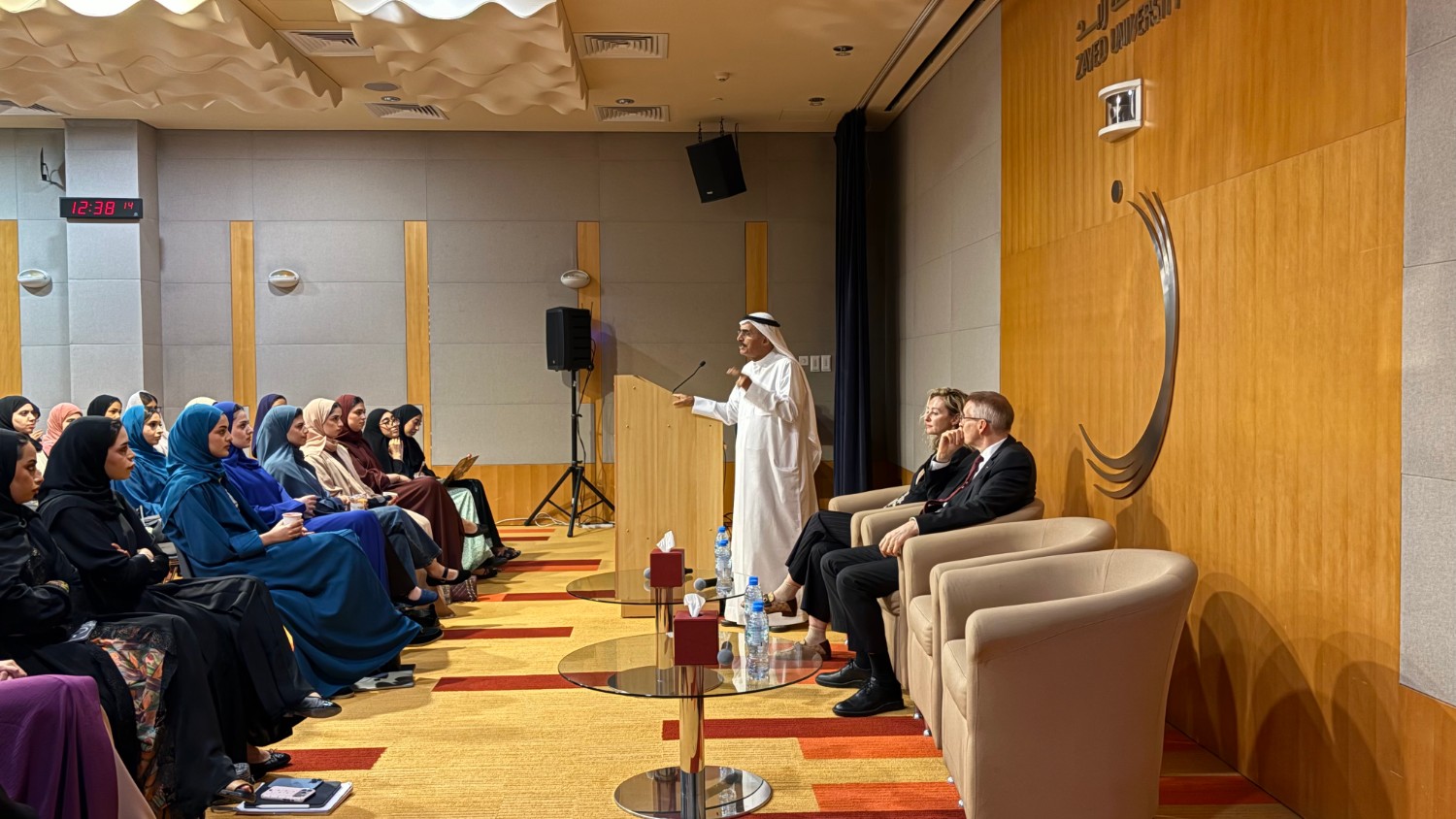
During one of my public lectures with students at a government university, a member of the audience asked me a question that seemed simple on the surface but carried profound meaning: Why do we always associate sustainability with climate change, even when we speak about leadership, education, public health, or governance? This question became an important starting point for understanding the global shift in the meaning of sustainability, and how climate became its primary gateway, even though sustainability is far broader than the environment alone.
Over the past two decades, climate change has become the central lens through which the world re-examines sustainability. As global temperatures rose by 1.1°C, natural disasters increased by 83% over the last forty years, and disease patterns shifted, governments and institutions realized that these phenomena do not threaten the environment alone—they threaten the sustainability of human systems themselves: food, water, health, the economy, and governance. With this realization, the public consciousness began to link sustainability to climate, because climate has become the greatest threat to the long-term resilience of societies.
Yet sustainability is not merely an environmental concept; it is a way of thinking about the future. In leadership, it means the ability to make long-term, data-driven decisions that go beyond short-term reactions and strengthen society’s capacity to withstand shocks. In education, it means preparing a generation capable of navigating a rapidly changing world—environmentally, economically, and technologically. In public health, it means building systems capable of confronting heatwaves, pollution, emerging diseases, and disruptions in medical supply chains. In governance, it means a state’s ability to manage resources, risks, and opportunities in ways that ensure continuity of services, fairness, and social stability.
Here, the deep connection between sustainability and social justice becomes clear. Climate change does not affect everyone equally; low-income families suffer more from heatwaves, air pollution, rising food prices, and disruptions in health services. As social gaps widen, societies become less able to withstand crises. Social justice has therefore become a core pillar of sustainability, because unjust societies cannot be sustainable, nor can they effectively confront climate, economic, or health challenges. Today, sustainability is a framework that links climate to justice, the environment to humanity, and decisions to long-term societal wellbeing.
Returning to Ibn Khaldun, we find that this concept is not new. More than six centuries ago, he articulated a profound vision of what we now call sustainability. He wrote that the prosperity of a state rests on three pillars: justice, production, and social solidarity. These pillars are the very foundations of modern sustainability. Justice corresponds to social equity, production to a resilient and diversified economy, and solidarity to a society capable of enduring change. Climate change has revived Ibn Khaldun’s insight, for societies that lack any of these pillars become more fragile in the face of environmental and economic crises. He did not use the word “sustainability,” but he described its essence precisely when he said that a state without justice loses its cohesion, a state without production loses its strength, and a state without solidarity collapses at the first shock.
In this context, the United Arab Emirates offers a global model of sustainable leadership—not only in climate, but in governance, health, and education. The UAE was the first country in the region to commit to net-zero emissions by 2050, has invested more than $50 billion in clean energy projects across more than 70 countries, and is expanding its domestic clean-energy capacity to 14 gigawatts by 2030. These figures are not merely environmental initiatives; they reflect leadership that anticipates the future and builds national resilience in a rapidly changing world. In public health, the UAE demonstrated the strength of its system during the pandemic and is now preparing for climate-linked health risks—from heat stress to respiratory diseases. In education, sustainability has been integrated into curricula, and scientific research in climate, health, and governance is being expanded to prepare a generation capable of navigating an uncertain future.
In governance, the UAE has adopted a forward-looking model grounded in data, innovation, and long-term planning, as seen in its artificial intelligence strategy, circular economy initiatives, and food and water security strategies. These are not merely government plans; they are expressions of sustainable leadership that embody what Ibn Khaldun described as “the strength of a state in the quality of its stewardship.”
The question posed by the student was not only about sustainability—it was about how we think about the future. The answer he deserves is that sustainability is not simply about protecting the environment; it is about protecting society’s ability to endure: in its leadership, its education, its health, its economy, and its values. Climate change did not create sustainability, but it made it essential. It made it a shared language across sectors, a framework for understanding the future, and a responsibility that extends beyond governments to individuals, institutions, and universities.
Thus, climate change has become the spark that redefined sustainability—not as an option, but as a fundamental condition for the survival and prosperity of societies across time.
Back to news